The History of the Jaguar E-Type: Icon of the 1960s
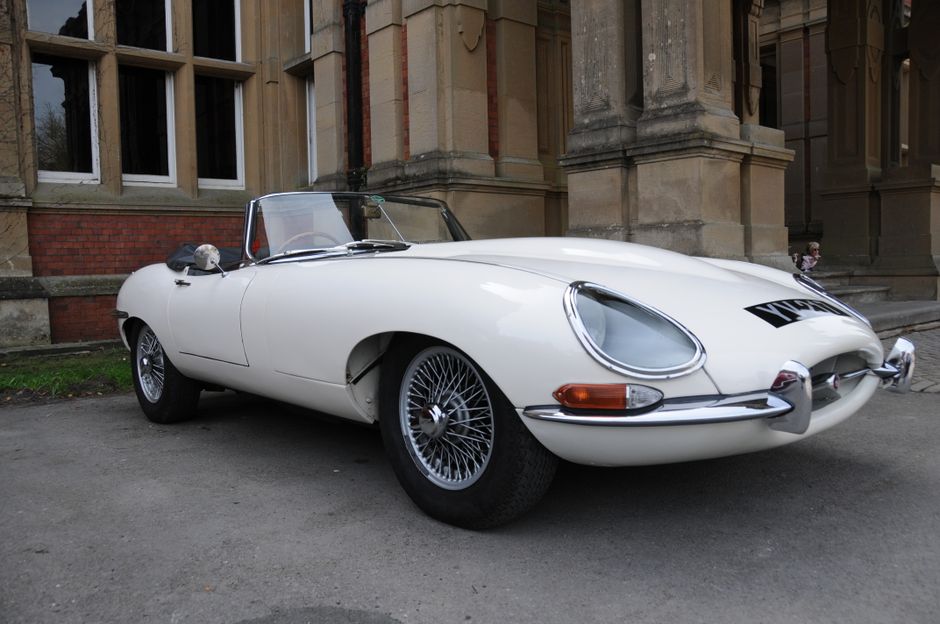
The Jaguar E-Type, first unveiled to the public in March 1961 at the Geneva Motor Show, immediately captured the imagination of the automotive world. Its long, sculpted bonnet, covered headlamps, and sweeping curves represented a radical departure from the sports cars of the previous decade. More than just a beautiful design, the E-Type was a technical tour de force that brought race-bred engineering to the road at a relatively accessible price. Over the following decade, it evolved through several series, each refining the original concept while maintaining the essential character that made it an icon of the 1960s.
The creation of the E-Type was deeply rooted in Jaguar’s racing experience. The company had achieved remarkable success at the 24 Hours of Le Mans in the 1950s with the C-Type and D-Type models, and many of the lessons learned on the track were applied directly to the new road car. The goal was to produce a vehicle that could deliver high performance, superb handling, and long-distance touring comfort. This combination of attributes, along with its stunning appearance, ensured that the E-Type would become one of the most celebrated sports cars in history.
Development of the E-Type was led by Jaguar’s chief engineer William Heynes and aerodynamicist Malcolm Sayer. Sayer, who had a background in aircraft design, used mathematical principles to shape the body for low drag and high-speed stability. The result was a car that not only looked fast but actually achieved a top speed of 150 mph in its earliest form, making it one of the fastest production cars of its era.
The Design Philosophy of Malcolm Sayer
Malcolm Sayer’s approach to automotive design was unusual for the time. Rather than relying solely on clay models and stylists’ intuition, he employed aerodynamic calculations derived from his work at the Bristol Aeroplane Company. By studying airflow over the body and using wind tunnel data, Sayer was able to create a shape that minimized drag while maintaining downforce at high speeds. The E-Type’s characteristic long hood, curvaceous fenders, and tapered tail were not merely aesthetic choices—they were functional elements that contributed to its outstanding performance.
The front end featured covered headlamps that reduced turbulence and gave the car its distinctive feline face. The bonnet was hinged at the front and featured prominent power bulges to clear the engine’s cam covers. From the side, the E-Type presented a continuous line that flowed from the nose to the tail, interrupted only by the cutout for the rear wheel arch. Sayer also positioned the radiator at a steep angle to reduce the frontal area, and the windscreen was wrapped to improve airflow. Every surface was considered in terms of its effect on the car’s behavior, creating a unified design that remains visually striking decades later.
The overall lightness of the structure was another key principle. Sayer and his team used the monocoque construction technique for the main body, a method borrowed from aircraft design that eliminated the need for a separate chassis frame. This not only saved weight but also increased torsional rigidity, which directly benefited handling and ride quality. The front subframe, however, remained a separate unit to simplify manufacturing and repair. This hybrid approach allowed the E-Type to combine a relatively low curb weight with the strength needed for high-speed motoring.
Engineering Innovations Under the Skin
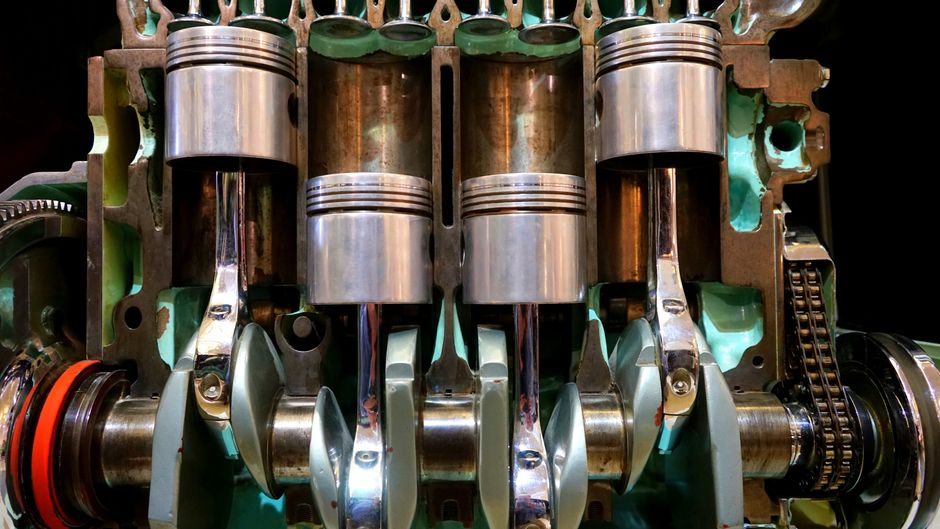
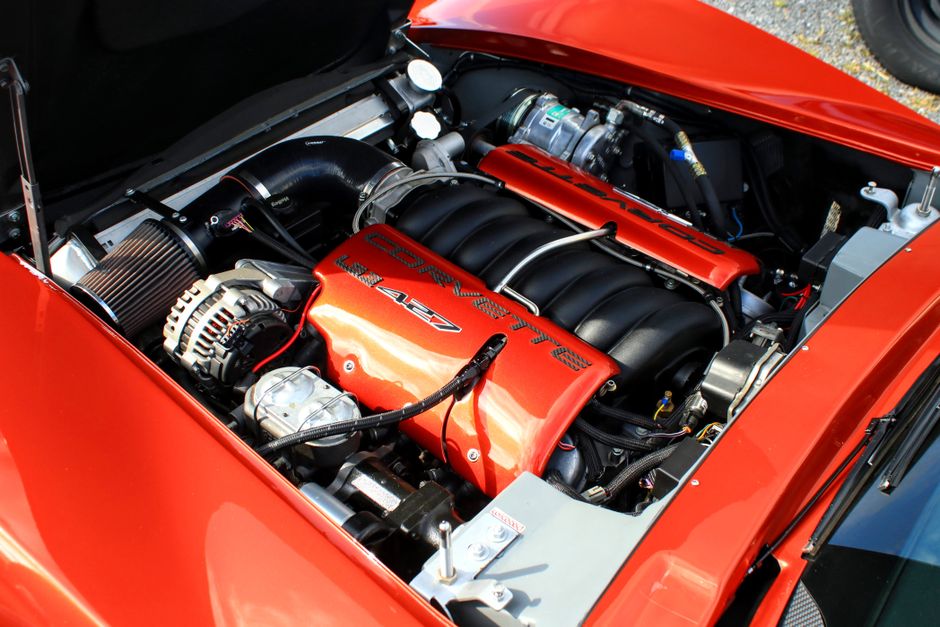
Beneath the beautiful exterior, the E-Type incorporated several advanced engineering features that set it apart from its contemporaries. The engine was a 3.8-liter inline-six derived from the XK150, but with improved cylinder head design and larger carburetors. It produced 265 horsepower, which was more than enough to propel the car to 60 mph in under seven seconds. The triple SU carburetors and twin exhaust manifolds were part of a carefully tuned induction and exhaust system that delivered both power and a distinctive engine note.
The chassis employed independent front suspension using torsion bars and wishbones, while the rear featured independent suspension with lower wishbones and drive shafts acting as upper links. This system, known as the “Jaguar independent rear suspension,” had been developed from the D-Type racer and gave the E-Type excellent traction and roadholding. The combination of a stiff monocoque body, a low center of gravity, and well-damped suspension allowed the car to corner with remarkable poise for its era. Disc brakes were fitted on all four wheels, a technology that Jaguar had pioneered in racing and that provided fade-free stopping power even under repeated hard use.
Cooling and aerodynamics were also carefully managed. The engine’s cooling system was designed with a cross-flow radiator and a thermostatically controlled electric fan to maintain consistent temperatures. The fuel tank was mounted behind the rear axle, which helped balance the weight distribution. The overall packaging of the E-Type was efficient, with the spare wheel stored in a well beneath the luggage area and the battery located in the front boot. These details, while not immediately visible, contributed to the car’s usability as a grand tourer capable of covering long distances at high speeds.
Racing Heritage and Competition Success
Although the E-Type was primarily a road car, its racing pedigree was undeniable. Jaguar had intended to compete in endurance racing with the E-Type, and several privateer teams quickly took the car to tracks around the world. In 1961, just months after its launch, an E-Type finished in the top ten at Le Mans despite its relatively modest engine size compared to the larger-displacement prototypes. Its aerodynamic efficiency and reliability allowed it to excel on fast circuits where top speed and fuel economy were crucial.
The E-Type also achieved success in national and international rally events, sports car races, and hill climbs. Drivers appreciated its predictable handling and strong brakes, which gave them confidence to push the car to its limits. Jaguar itself fielded a factory team with modified lightweight versions, often referred to as “Lightweight E-Types.” These cars featured aluminum body panels, engines with improved cylinder blocks, and other weight-saving measures. The lightweight E-Types competed at Le Mans and in the Tourist Trophy races, occasionally challenging Ferrari and other dominant marques.
One of the most notable racing milestones came in 1962 when an E-Type driven by Roy Salvadori set a new lap record at the Goodwood circuit. The car’s combination of power, balance, and aerodynamic efficiency made it a formidable competitor in the GT class. Even after Jaguar officially withdrew from factory racing in the mid-1960s, private teams continued to campaign E-Types with considerable success. This ongoing competition involvement helped refine the car’s engineering and burnished its reputation as a driver’s machine with true racing credentials.
“The E-Type is the most beautiful car ever made.” – Enzo Ferrari
The Evolution of the E-Type: Series 1, 2, and 3
The Jaguar E-Type underwent several revisions during its fourteen-year production run, each addressing changing regulations, customer preferences, and technical improvements. The Series 1, built from 1961 to 1968, is often considered the purest expression of the design. It featured covered headlamps with glass lenses, a small grille opening, and a flat floor pan. The interior was relatively sparse but elegant, with leather seats, a wood-rimmed steering wheel, and Smiths gauges. Early Series 1 cars had a 3.8-liter engine, and from 1964 onwards a 4.2-liter engine was offered, providing more torque and a better spread of power.
With the introduction of the Series 2 in 1968, Jaguar made several changes to comply with safety and emissions regulations in the United States, which was a major market for the car. The headlamps were now uncovered and moved forward, the front grille was larger, and the bumper brackets were more prominent. The interior saw upgrades such as a new dashboard design and improved ventilation. The engine was also modified with different carburetors and reduced compression ratios to meet stricter emission limits, which slightly reduced peak power. Despite these concessions, the Series 2 remained a capable and desirable sports car.
The final iteration, the Series 3, arrived in 1971 and represented the most significant departure from the original concept. To meet growing demand for greater performance and comfort, Jaguar replaced the six-cylinder engine with a 5.3-liter V12. This engine produced around 272 horsepower and provided smooth, effortless acceleration. The V12 required a wider body to accommodate the larger engine bay, so the Series 3 featured flared wheel arches, a larger front grille, and a distinctively different rear end with a flatter tail. The suspension and brakes were also upgraded to handle the increased weight and power. The Series 3 remained in production until 1975, marking the end of an era for the model line.
Cultural Legacy and Modern Relevance
Beyond its technical and racing achievements, the Jaguar E-Type became a cultural symbol of the 1960s. Its appearance in films, television shows, and fashion magazines cemented its status as an icon of style and sophistication. Celebrities, musicians, and even members of the British royal family were known to drive or be photographed with E-Types. The car embodied the optimism and dynamism of the decade, representing a blend of British craftsmanship and modern engineering that resonated with a global audience.
Today, the Jaguar E-Type is widely recognized as one of the most important sports cars ever produced. It continues to be celebrated at concours d’elegance, vintage racing events, and automotive museums. Many examples have been meticulously restored, often using original parts and techniques to preserve their authenticity. The car’s design has influenced subsequent generations of sports cars, and its fundamental engineering principles—lightweight construction, independent suspension, and disc brakes—have become standard in the industry.
Appreciating the E-Type in the 21st century involves understanding the context in which it was conceived. It was a product of a time when manufacturers could take risks and develop vehicles that prioritized driving experience over mass-market appeal. The E-Type’s enduring allure lies in its ability to connect driver, machine, and road in a way that feels visceral and unmediated. For enthusiasts and historians alike, the Jaguar E-Type remains a remarkable example of how thoughtful design and racing heritage can coalesce into a truly timeless machine.